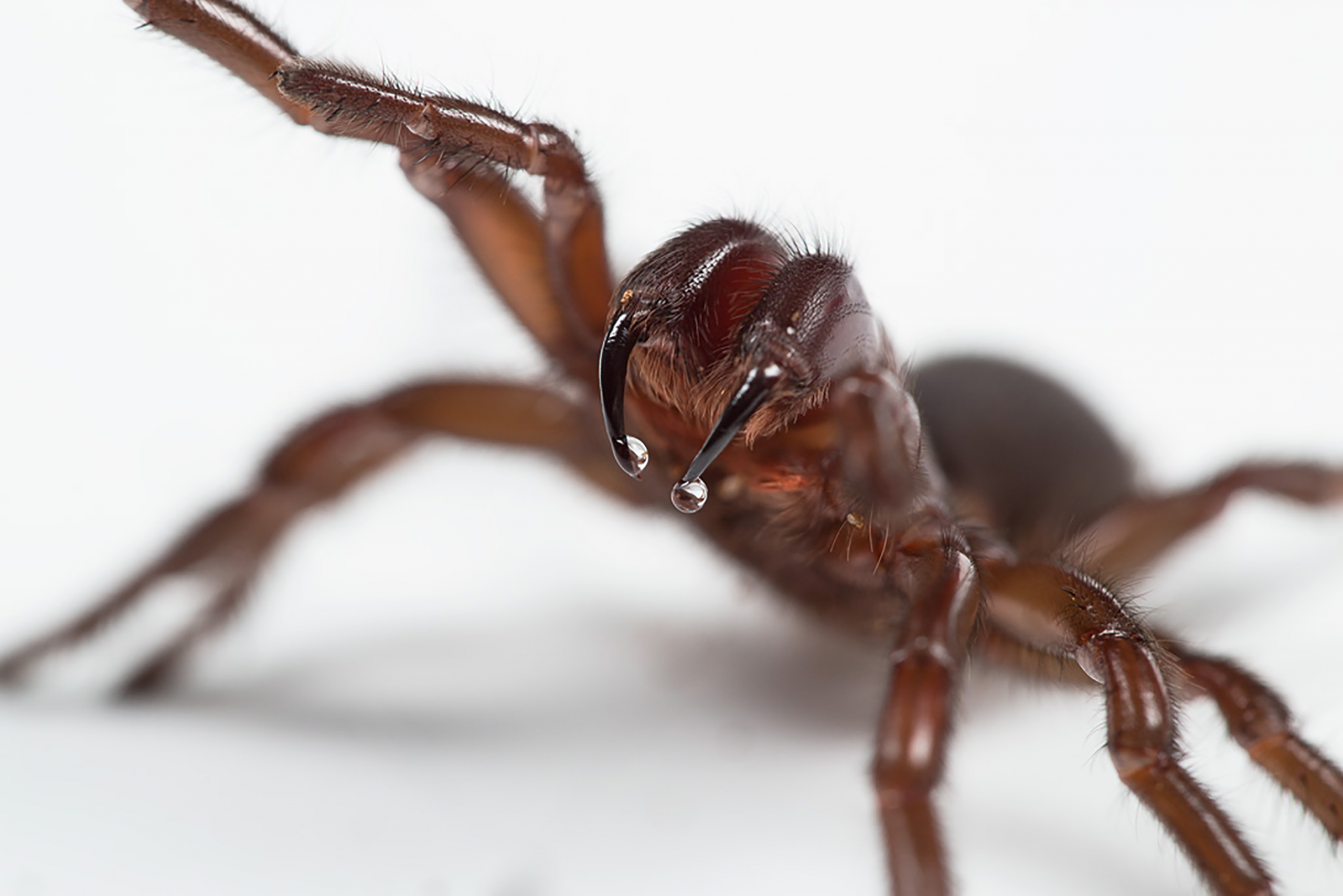
Researchers have reportedly discovered that the venom from one of the world’s deadliest spiders may be able to help recovering heart attack patients and extend the lives of procured donor hearts.
According to a study released on Thursday in the peer-reviewed journal Circulation, a group of researchers from the University of Queensland in Australia has found that a molecule in the venom from Australian funnel-web spiders has been linked to improving heart cell viability, and could be used in medical treatments for heart attacks and donation retrieval for transplants.
Professor Glenn King of the University of Queensland and fellow researchers Dr. Nathan Palpant and cardiologist Peter Macdonald explained in their research paper that the Australian funnel-web spider’s venom contains the protein Hi1a, which reportedly interrupts the message signaling for a cell to die in instances of oxygen deprivation, such as during a heart attack or transplant.
“Ischemia-reperfusion injury [IRI] is one of the major risk factors implicated in morbidity and mortality associated with cardiovascular disease,” they write in their report. “During cardiac ischemia, the build-up of acidic metabolites results in decreased intracellular and extracellular pH that can reach as low as 6.0-6.5.”
“The problem with the heart is that it has zero capacity to regenerate,” King told The Guardian of the project. “People might survive a heart attack but…those muscle cells will never come back, so they’ve got a very damaged heart. That’s why any tissue you can rescue during or after the heart attack is really, really important.”
Indeed, according to the University of California, Los Angeles Heart and Vascular Services, cardiac tissue cannot regenerate once damaged. Deterioration of the muscle can thus result in heart failure, which affects 500,000 Americans annually.
“Despite decades of research, no one has been able to develop a drug that stops this death signal in heart cells, which is one of the reasons why heart disease continues to be the leading cause of death in the world,” Palpant added in a statement to the University of Queensland News.
David Wilson
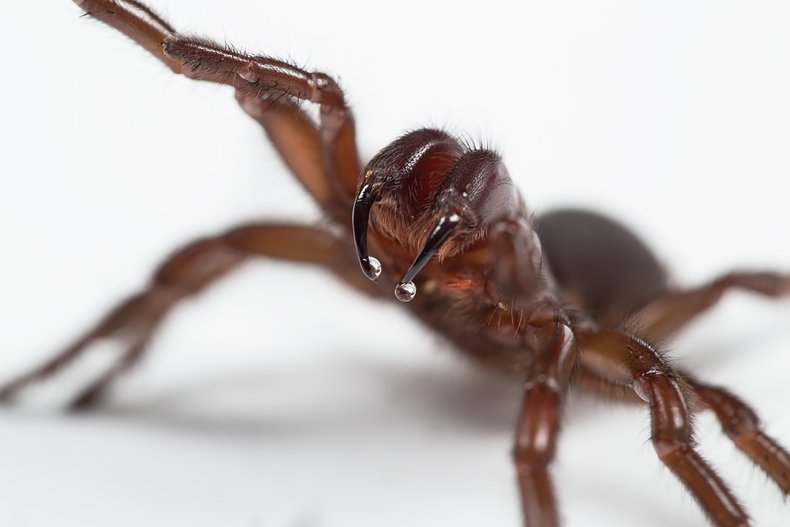
The venom of Australian funnel-web spiders also contains delta-hexatoxins, which are the peptides that make the venom dangerous for humans and primates. There have been 13 recorded deaths from funnel-web spiders, though none since anti-venoms became available in the 1980s. It is estimated 30 to 40 people are bitten every year.
When a person is bitten by the spider, the venom blocks nerve impulses to the muscles and causes paralysis of the entire nervous system. This leads to a range of symptoms including muscular twitching, breathing difficulty, fast pulse and increased blood pressure, among others.
However, the Hi1a molecule’s potential has left Macdonald particularly hopeful about the future of cardiac medicine, especially in relation to heart transplants.
“Usually, if the donor heart has stopped beating for more than 30 minutes before retrieval, the heart can’t be used,” he said in a statement to the Australian Broadcasting Corporation (ABC). “Even if we can buy an extra 10 minutes, that could make the difference between someone having a heart and someone missing out.
“For people who are literally on death’s door, this could be life-changing,” he added.
“It’s always a race for the surgeon to try and keep that heart alive before they get it into the recipient. We think the drug [candidate] will be able to be used to increase the number of donor hearts that are going to be available for transplant,” King also shared with The Guardian.
King told the University of Queensland News that he hopes Hi1a could one day be administered by emergency services responding to the scene.
“This is particularly important in rural and remote parts of Australia where patients and treating hospitals can be long distances apart—and when every second counts,” he told the outlet. “Also, this could help for the transfer of donor hearts for cardiac transplantation—allowing these donor hearts to be transported over longer distances and therefore increasing the network of available donors and recipients.”
Newsweek reached out to King, Palpant and Macdonald for additional comment on their research, but did not hear back in time for publication.
In 2018, Colossus the Australian funnel-web spider made headlines when he was obtained by the Australian Reptile Park in Somersby, New South Wales, and “milked” as part of a project to create additional anti-venom serums and medications.
Related Posts
