Not just Fort Rucker: Commanders can ask about COVID vaccine status DoD-wide – ArmyTimes.com
Fort Rucker made headlines Wednesday and Thursday when leadership there said they would start to require proof of COVID-19 vaccination for unmasked service members.
But the Alabama post, home to the Army’s warrant officer and aviation training programs, isn’t the first Defense Department installation to do this, according to guidance earlier this month from another Army post.
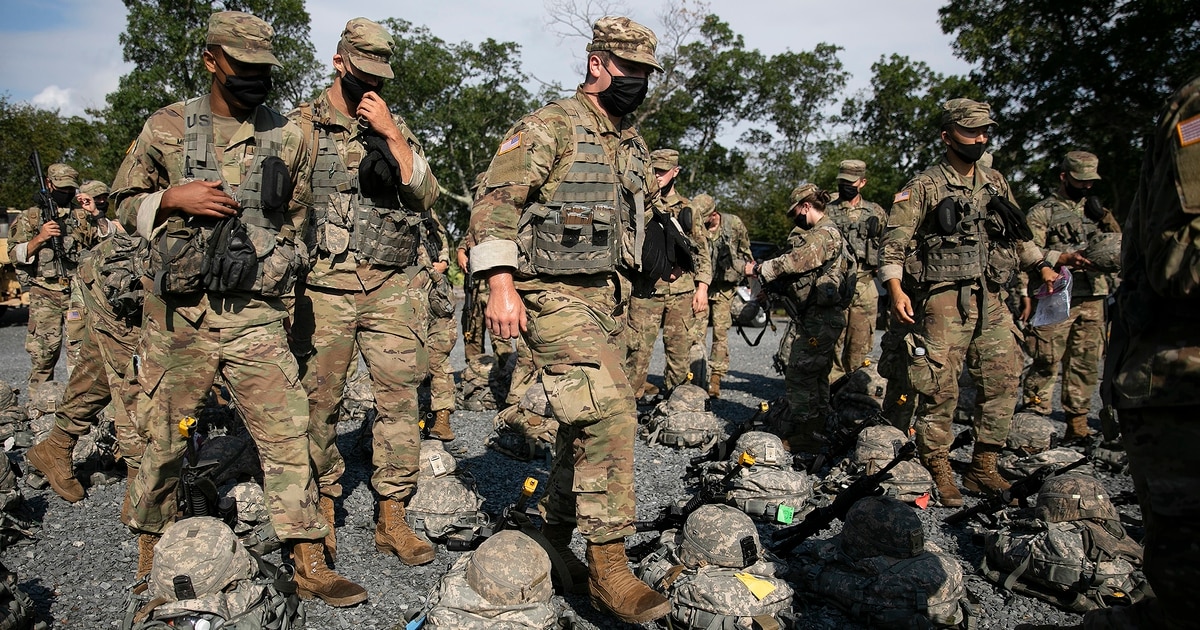
Current policy permits fully-vaccinated troops, civilians and contractors to go without a face mask on military bases. Unvaccinated personnel are still required to wear masks.
Any commander or supervisor can ask unmasked uniformed personnel about their vaccination status, not just those at Fort Rucker. The installation wasn’t the first to put out this guidance, either.
“In accordance with this guidance, unmasked, fully vaccinated service members should be prepared to show proof of vaccination (CDC vaccination card or other medical documentation),” said the announcement accompanying the guidance. “Service members and civilian employees who misrepresent their vaccination status may be subject to appropriate adverse administrative or punitive actions.”
Leaders cannot ask unmasked DoD civilian employees if they’ve received the vaccine unless “the supervisor has a reasonable basis to believe the unmasked employee has not been fully vaccinated, based on reliable evidence such as firsthand knowledge of voluntary employee statements.”
Fort Rucker, which issued its guidance on July 13, roughly three weeks after the DoD’s change in policy, wasn’t the first military installation to implement the policy after its announcement, either.
Sign up for the Army Times Daily News Roundup
Don’t miss the top Army stories, delivered each afternoon
(please select a country) United States United Kingdom Afghanistan Albania Algeria American Samoa Andorra Angola Anguilla Antarctica Antigua and Barbuda Argentina Armenia Aruba Australia Austria Azerbaijan Bahamas Bahrain Bangladesh Barbados Belarus Belgium Belize Benin Bermuda Bhutan Bolivia Bosnia and Herzegovina Botswana Bouvet Island Brazil British Indian Ocean Territory Brunei Darussalam Bulgaria Burkina Faso Burundi Cambodia Cameroon Canada Cape Verde Cayman Islands Central African Republic Chad Chile China Christmas Island Cocos (Keeling) Islands Colombia Comoros Congo Congo, The Democratic Republic of The Cook Islands Costa Rica Cote D’ivoire Croatia Cuba Cyprus Czech Republic Denmark Djibouti Dominica Dominican Republic Ecuador Egypt El Salvador Equatorial Guinea Eritrea Estonia Ethiopia Falkland Islands (Malvinas) Faroe Islands Fiji Finland France French Guiana French Polynesia French Southern Territories Gabon Gambia Georgia Germany Ghana Gibraltar Greece Greenland Grenada Guadeloupe Guam Guatemala Guinea Guinea-bissau Guyana Haiti Heard Island and Mcdonald Islands Holy See (Vatican City State) Honduras Hong Kong Hungary Iceland India Indonesia Iran, Islamic Republic of Iraq Ireland Israel Italy Jamaica Japan Jordan Kazakhstan Kenya Kiribati Korea, Democratic People’s Republic of Korea, Republic of Kuwait Kyrgyzstan Lao People’s Democratic Republic Latvia Lebanon Lesotho Liberia Libyan Arab Jamahiriya Liechtenstein Lithuania Luxembourg Macao Macedonia, The Former Yugoslav Republic of Madagascar Malawi Malaysia Maldives Mali Malta Marshall Islands Martinique Mauritania Mauritius Mayotte Mexico Micronesia, Federated States of Moldova, Republic of Monaco Mongolia Montserrat Morocco Mozambique Myanmar Namibia Nauru Nepal Netherlands Netherlands Antilles New Caledonia New Zealand Nicaragua Niger Nigeria Niue Norfolk Island Northern Mariana Islands Norway Oman Pakistan Palau Palestinian Territory, Occupied Panama Papua New Guinea Paraguay Peru Philippines Pitcairn Poland Portugal Puerto Rico Qatar Reunion Romania Russian Federation Rwanda Saint Helena Saint Kitts and Nevis Saint Lucia Saint Pierre and Miquelon Saint Vincent and The Grenadines Samoa San Marino Sao Tome and Principe Saudi Arabia Senegal Serbia and Montenegro Seychelles Sierra Leone Singapore Slovakia Slovenia Solomon Islands Somalia South Africa South Georgia and The South Sandwich Islands Spain Sri Lanka Sudan Suriname Svalbard and Jan Mayen Swaziland Sweden Switzerland Syrian Arab Republic Taiwan, Province of China Tajikistan Tanzania, United Republic of Thailand Timor-leste Togo Tokelau Tonga Trinidad and Tobago Tunisia Turkey Turkmenistan Turks and Caicos Islands Tuvalu Uganda Ukraine United Arab Emirates United Kingdom United States United States Minor Outlying Islands Uruguay Uzbekistan Vanuatu Venezuela Viet Nam Virgin Islands, British Virgin Islands, U.S. Wallis and Futuna Western Sahara Yemen Zambia Zimbabwe
By giving us your email, you are opting in to the Army Times Daily News Roundup.
A July 1 order from Maj. Gen. Charles Costanza, commanding general of the 3rd Infantry Division and Fort Stewart, Georgia, empowers “direct line supervisors” such as team leaders to ask unmasked soldiers about their vaccination status, in addition to compelling vaccinated troops to carry their shot record.
“Commanders and direct line supervisors may ask subordinates about whether they have been vaccinated in order to enforce this policy,” Costanza’s order reads. “All vaccinated [troops] shall maintain a copy of their…[vaccine card] in either hard copy or as a photo or document on their phone.”
Fort Stewart may not have been the first installation to update its rules governing vaccine card checks either — the DoD has hundreds of installations, and not all of them maintain public-facing pages where the information is readily accessible.
Many installations are also maintaining leave restrictions for unvaccinated personnel, which vaccinated troops can avoid by providing their shot records.
The DoD memorandum also states that “local commanders and supervisors may elect to establish more stringent guidelines for wearing masks.”