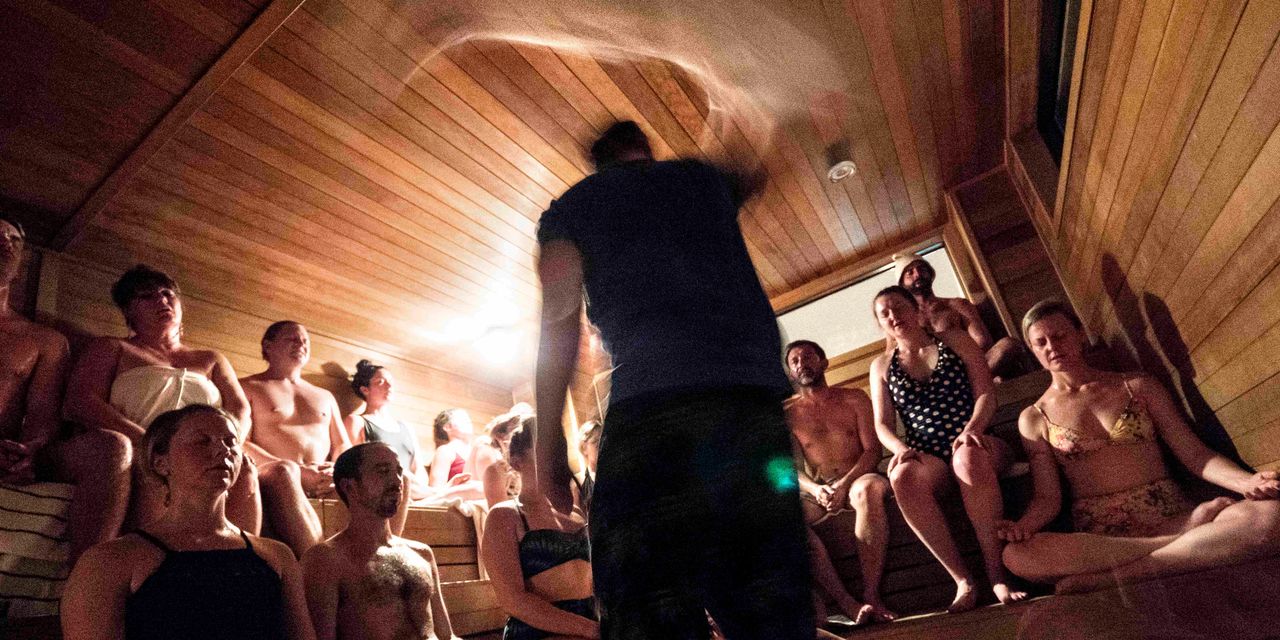
Nearly 20 people crammed into the scorching sauna of a Berlin spa on a cool evening in 2019, waiting for the Aufguss ceremony to begin. The word Aufguss translates to “infusion,” and spa-loving Germans speak about it as if it’s a spiritual experience. Sweaty missionaries—called Aufguss masters—have spread the ceremony to spas across Europe and beyond.
Carrying a wooden bucket and ladle, the Aufguss master stepped into the sauna to begin the ceremony. He scooped water infused with lemon grass essential oil onto the sauna’s hot rocks, releasing a pulse of scented steam. Then he picked up a towel and started whipping it around above his head.
Many cultures have ritualistic sweating ceremonies—if not currently, then at some point in their histories. Marbled hammams dot the Middle East; Native Americans have sweat lodges; Koreans frequent jjimjilbangs; Russians drink vodka in banyas; and the Finns have exported saunas across the Western world. For many people, there’s something both calming and cathartic about perspiring in vast quantities.
Mesmerizing towel work is the crux of the Aufguss ceremony, because it distributes thick gusts of hot wind around the sauna. Like the opposite of a winter windchill, which makes you feel colder, the steamy gale makes the sauna feel hotter. A good Aufguss master can work up enough wind over the course of the ten-minute ceremony so that your hair blows in the breeze, even as sweat floods down your skin.
The outpouring is not only sweat: Scientists have figured out that in a steamy sauna, between 30% and 55% of the liquid that rolls down your body is actually condensed water. Skin temperature in a sauna rises to a few degrees above normal (to about 109°F), but the rest of the space is typically about 175°F to 195°F, and the steam is above 210°F. Because your body is one of the coolest objects in the room, evaporated water condenses on it like kettle steam on a cold winter window.
Related Posts

ラブドール リアル 本物のリフに依存するダッチワイフである、優秀で魅力的な米国の若い女性バージニアのプレゼンテーション